The Ten-Minute Walk After Dinner
One of the few habits where the research, the effort required and the payoff all line up neatly.
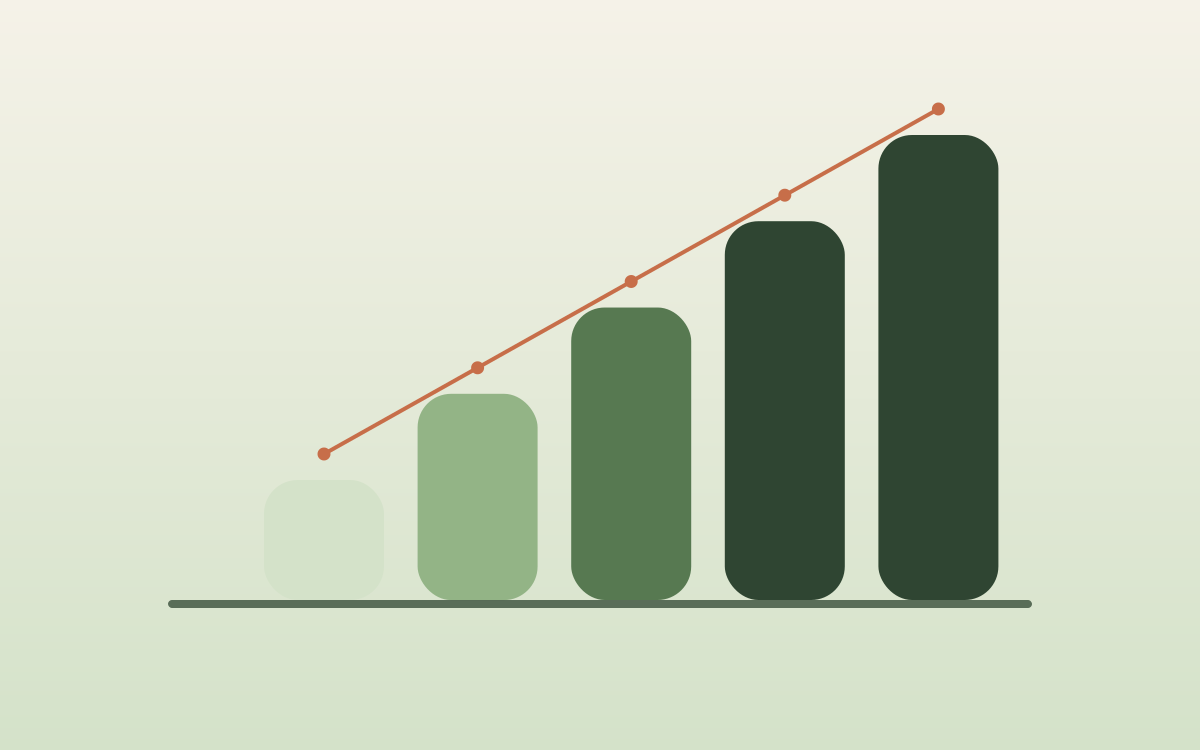
Most health habits ask you to trade a lot of willpower for a small, distant benefit. The short post-meal walk is the rare exception: it costs ten minutes, requires no equipment, no change of clothes and no gym membership, and it acts on something measurable within the hour.
What happens after you eat
A meal containing carbohydrate raises blood glucose. In a healthy person, insulin brings it back down over the following hour or two. The size and duration of that rise varies with the meal, the person, and — usefully — with what the body is doing while it digests.
Contracting muscle takes up glucose from the blood through a pathway that does not depend entirely on insulin. Walk, and the legs start drawing down the same sugar the pancreas is working on. Across a number of small trials, light walking within an hour or so of eating has been associated with a lower post-meal glucose peak compared with sitting. The effect is consistent enough, and the intervention harmless enough, that several diabetes organisations now mention it in their everyday-activity guidance.
The short version
Ten to fifteen minutes of easy walking after your largest meal tends to blunt the post-meal glucose rise, aids digestion for many people, and quietly adds two to three thousand steps a day if you make it a habit. It is not a licence to eat differently, and it is not a treatment for diabetes.
How easy is easy
Conversational pace. If you are breathing hard, you have overshot the point of the exercise — and for some people a vigorous effort straight after a large meal is simply uncomfortable. The intensity that matters here is "moving", not "training". A loop of the block. Walking to post a letter. Pacing the hallway on a phone call.
Timing is forgiving. Starting within about half an hour of finishing the meal captures most of the effect, but a walk forty-five minutes later is not wasted.
The part nobody mentions
The real return on this habit is not metabolic, it is behavioural. Ten minutes after dinner is one of the easiest slots in the day to defend. It has a natural trigger — putting the plate down — which is exactly what habit research says a new behaviour needs. And because it feels trivially small, it survives the weeks where everything else falls apart.
Three thousand extra steps a day, sustained for a year, is a meaningfully more active life than the one that started it. Nobody arrives there by deciding to become an athlete on a Monday.
Making it stick
- Attach it to the meal, not the clock. "After I clear the table" beats "at 7:30pm", because the table gets cleared even on the days the schedule collapses.
- Keep shoes by the door. Friction is the whole game at this scale.
- Let it be boring. The same route every night is a feature. Decisions are what kill small habits.
- Take someone. A walk that doubles as the day's only uninterrupted conversation gets defended for reasons that have nothing to do with glucose.
- Weather-proof it. Have an indoor version — stairs, a hallway, ten minutes of tidying on your feet — so a rainy week does not end the streak.
Where it fits in the bigger picture
Public-health guidance in most countries lands around 150 minutes a week of moderate activity plus two sessions of muscle strengthening. A nightly ten-minute walk is roughly seventy minutes of that, achieved without ever thinking of it as exercise. It does not replace the strength work, and it does not replace longer or harder efforts if you enjoy them. It is the floor, and a floor you actually stand on beats a ceiling you never reach.
Talk to a clinician first if
- You have been told to limit activity, or you are recovering from surgery or a cardiac event.
- You manage diabetes with insulin or sulfonylureas — added activity can lower glucose further than you expect, and your monitoring or dosing may need adjusting.
- You get chest pain, unusual breathlessness, or dizziness when you walk. That is a reason to be assessed, not to push through.
Sources and further reading
- Physical Activity Guidelines for Americans
- World Health Organization — Physical activity
- Diabetes UK — Exercise and activity
Links go to health authorities and professional bodies. We check them at each review; if one has moved, tell us at corrections@healwithinmagazine.com.
Read next
All articles
Baking Soda
Sodium Bicarbonate: What Baking Soda Actually Is, and What It Actually Does
One compound, one mechanism, and a surprisingly short list of things it genuinely does. Start here before the internet gets to you.
Baking Soda
Baking Soda and Sport: The One Use With Serious Trials Behind It
Sodium bicarbonate is on sports institutes' shortlist of supplements that actually work. It is also the one most likely to ruin your session.

Baking Soda
Baking Soda and Your Teeth: What the Dental Evidence Shows
Low abrasivity, decent stain removal, and one important thing it does not replace.
One email, once a fortnight
What we published, what we changed our minds about, and the one study worth your attention. No urgency, no countdown timers, no selling your address.
We confirm every subscription by reply, we never pass your address on, and one click unsubscribes you for good.